
A garage door can open and close while still having worn components or a safety feature that does not work properly. A regular garage door safety inspection helps Dallas homeowners identify changes before they lead to a breakdown or unsafe operation.
This checklist combines observations you can make from the ground with items to discuss during professional service. It primarily applies to residential sectional doors and their openers. Commercial and fire-rated assemblies need equipment-specific inspections.
The goal is to recognize concerns and verify appropriate safety functions—not to adjust springs, cables, or supporting hardware yourself.
Before Starting Your Inspection
Locate the manuals for your door and opener. Their procedures govern any operational tests, maintenance products, and equipment-specific requirements.
Begin with the door fully closed if it can reach that position normally. If it is stuck open, crooked, off track, or has a visibly broken spring or damaged cable, stop and call a technician. Keep people away and do not pull an open door’s emergency release when a support failure is suspected.
Do not perform moving-door tests until visible mechanical concerns have been resolved. Keep children and pets away throughout the inspection.
1. Inspect Door Panels and Visible Hardware
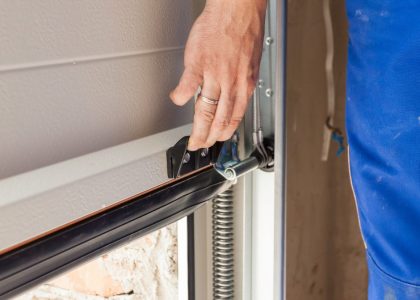
From a safe position with the door stationary, look for changes in the door sections and their connections.
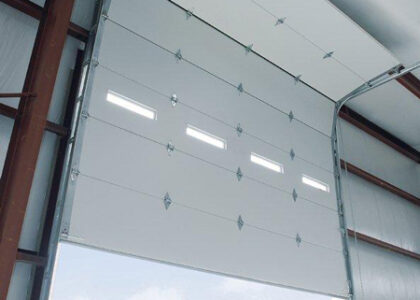
- Panels have no significant cracks, separation, or distortion.
- Hinges and brackets show no obvious damage or missing fasteners.
- The opener attachment has no visible separation from the door.
- Warning labels are present and readable.
Note anything unusual rather than tightening unfamiliar hardware. Some garage door parts carry spring tension even when the door is closed.
2. Look for Spring and Cable Damage
Springs counterbalance the door, while lifting cables help support its movement. Their condition is central to a garage door safety inspection.
- No visible break or separation appears in the spring assembly.
- Accessible cables show no fraying, broken strands, or displacement.
- Supporting brackets show no obvious movement or deterioration.
These are visual checks only. Do not touch, loosen, or adjust spring assemblies, cable drums, or bottom brackets. If damage is visible, stop using the door and arrange garage door repair.
3. Check Tracks and Rollers Visually
An overhead garage door needs a clear, properly aligned travel path.
- Accessible tracks have no obvious bends or impact damage.
- Rollers are seated in their tracks.
- No stored item obstructs the door or its operating equipment.
A crooked door or displaced roller needs professional attention. Pushing it back into position can leave the underlying problem unresolved.
4. Have Door Balance and Movement Assessed
A technician should check that the door moves smoothly and is properly counterbalanced. Ask for this assessment if it jerks, binds, seems unusually heavy, or has begun moving differently.
- Any previous movement concerns have been evaluated.
- Balance and manual operation are checked during professional service.
- The opener is not being used to overcome a mechanical fault.
Manual balance testing requires disconnecting the opener and handling the door. If you are unsure about the door’s condition or the procedure, leave this step to a trained technician. Increasing opener force is not a substitute for correcting resistance.
5. Inspect Safety Sensors and Test Them Correctly
Photoelectric sensors, where fitted, help detect an obstruction across the doorway. Check their accessible lenses and note damaged wiring or loose mounting.
- Sensor lenses are clean and unobstructed.
- Indicator lights match the normal condition described in the manual.
- The manufacturer’s obstruction test is completed successfully.
Use the opener manual’s test method while standing clear of the opening. Do not use a person or pet as the obstruction. If the test fails, stop automatic operation and request garage door repair services. Never bypass the sensor system.
6. Verify Contact Reversal
The contact-reversal function is distinct from the photoelectric sensor check. CPSC recommends testing reversal and inspecting the door and opener every 30 days.
For many residential openers, the manual specifies placing a solid object such as a 2×4 flat on the floor beneath the door’s center and checking that the closing door reverses on contact. Follow your equipment’s exact instructions and stand clear.
- The specified contact-reversal test passes.
- A failed test is referred for service before further automatic use.
Do not test reversal using your hands or body. Avoid repeated attempts or force-setting changes when the door fails the test.
7. Check Controls and Emergency Release Access
Confirm that household members understand normal operation and can locate the instructions for emergency use.
- Wall controls and remotes work consistently.
- Controls are kept out of children’s reach.
- The emergency release handle is identifiable and accessible.
- The release procedure is understood before a power outage occurs.
Knowing where the release is does not mean it is safe to pull in every situation. A raised door with a failed spring or cable may fall when disconnected from the opener.
8. Review Seals and Insulated Panels
Weather seals and panel condition deserve attention during garage door maintenance, even though they are not substitutes for mechanical safety checks.
- Bottom and perimeter seals show no significant tearing or gaps.
- Panel surfaces show no concerning deterioration.
- On an insulated garage door, accessible insulation has no obvious detachment.
Record drafts, water entry, or new gaps for the service visit. They may reflect seal wear, panel damage, or a closing-position problem.
Commercial and Fire Rated Doors Need Additional Checks
Commercial garage doors may have different operators, controls, and protective devices. Use the manufacturer’s inspection procedures and a maintenance schedule suited to the equipment and usage.
A fire-rated garage door or rolling fire-door assembly also needs a qualified inspection of its fire-protection functions. Normal daily movement does not prove that automatic release and closure will work during a fire. Arrange required inspection and drop testing through qualified personnel; this residential checklist cannot replace that process.
Record Findings and Arrange Follow-Up
Keep a simple inspection record with the date, door and opener models, observations, test results, and unresolved items. Treat an uncertain result as something to investigate rather than marking it as passed.
Ask your garage door services provider to explain needed repairs and confirm that replacement components suit the system. If a door is replaced, professional garage door installation should include a review of supporting hardware, opener compatibility, and safety operation.
Bulldog Garage Door Repair offers Dallas-area repair, installation, opener services, parts, and preventive maintenance for residential and commercial properties.
Call 972-433-0407 or visit Bulldog Garage Door Repair’s services page to discuss an inspection or service appointment.
📍 Proudly serving homes and businesses across Dallas, Texas
📞 Call us today or visit www.bulldoggaragerepair.com to schedule service.
Frequently Asked Questions
How often should I perform a garage door safety inspection?
CPSC recommends checking the door and opener every 30 days. Follow the manufacturer’s procedures and arrange professional maintenance based on the equipment, usage, and observed condition.
Can I inspect springs and cables myself?
You can observe visible condition from a safe position. Repairs and adjustments to tensioned components belong with a trained technician.
What if my door opens normally but fails a reversal test?
Stop automatic operation and arrange service. Normal opening does not establish that the entrapment-protection features work correctly.
Does an insulated garage door need the same safety checks?
Yes. Insulation does not remove the need to assess hardware, door movement, opener operation, and safety features.
Is this checklist sufficient for commercial garage doors?
No. Commercial equipment needs its own inspection procedures. Fire-rated assemblies also require specialized checks and any applicable testing.