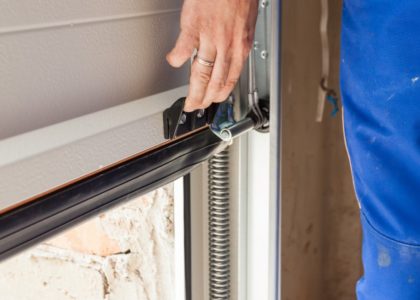

Garage door cables are easy to overlook until the door begins moving unevenly or stops working. These steel components play an important role in the lifting system, working with springs and other hardware to help control the door’s movement.
Recognizing cable problems early can help homeowners and business owners avoid operating a door with compromised lifting hardware. For properties across Dallas–Fort Worth, a visible cable defect or sudden change in door movement is a reason to arrange professional garage door repair.
If a cable is frayed, loose, displaced, or broken, stop using the door and keep people away from the opening. Do not attempt to adjust the cable or its attachment points.
What Do Garage Door Cables Do?
On many sectional garage doors, lift cables connect the bottom brackets to drums or a pulley arrangement associated with the spring system. They transmit the spring system’s lifting force to the door.
The opener drives movement, while the counterbalance system offsets much of the door’s weight. A more powerful opener cannot compensate for damaged lifting hardware.
Lift cables also differ from extension-spring safety cables. Safety cables pass through extension springs to help contain a spring if it breaks. The technician should identify which components your particular door uses.
1 Visible Fraying or Broken Strands
One of the clearest warning signs is a cable with separated wires, broken strands, or a fuzzy-looking section.
Fraying can indicate progressive wear, but the underlying cause also needs investigation. A technician may need to check whether the cable has been rubbing against another component or traveling incorrectly.
DASMA advises that worn or frayed cables can break and should be replaced by a trained technician because of the associated spring tension.
Look only from a safe position. Do not run your fingers along a cable or move the door to expose another section.
2 Rust or Corrosion on the Cables
Visible corrosion deserves attention, especially when accompanied by pitting, broken strands, or deterioration around cable ends.
Surface discoloration alone does not establish how much strength remains. A garage door professional can assess whether the cable requires replacement and inspect nearby hardware for related problems.
Painting over rust or applying lubricant does not restore a damaged cable. Ask the technician about the likely cause and any maintenance appropriate for your specific system.
3 A Crooked Door or Uneven Movement
A door that rises higher on one side, tilts in the opening, or rests unevenly may have a lifting-system problem.
Faulty garage door cables are one possible cause, but track damage, spring problems, or other mechanical faults can produce similar symptoms. Uneven movement calls for an inspection rather than a diagnosis based on appearance alone.
Do not repeatedly cycle the opener to see whether the door straightens itself. Continued operation can place additional stress on other garage door parts.
4 A Loose Cable or Cable Off the Drum
A cable hanging slack or sitting outside its intended path should be treated as a stop-use condition.
The issue may involve the cable itself, the drum, an obstruction, or a problem elsewhere in the counterbalance system. Simply putting the cable back in place may leave the original fault unresolved.
Do not pull on the cable or try to rewind it onto the drum. Leave the door in its current position, keep the area clear, and arrange professional garage door services.
5 New Scraping Grinding or Jerking
Changes in sound and movement can reveal that something needs attention. Scraping, grinding, or jerking may involve cables, rollers, tracks, drums, or other hardware.
These symptoms do not prove that the cables are faulty. However, when they occur alongside visible fraying, slack, or a crooked door, the need for an inspection becomes more urgent.
Describe what you already observed when booking service. Avoid operating a damaged door again to record the noise.
6 A Sudden Bang Followed by Poor Operation
A loud bang can accompany a failed spring or another component failure. If the door then becomes crooked, stops moving, or develops a loose cable, stop using it.
This is one reason cable inspections may also lead to garage door spring repair. The two systems work together, and the technician needs to determine what failed before replacing components.
Do not pull the emergency-release handle on an open or partially open door when spring or cable failure is suspected. The door may move unexpectedly.
What to Do If You Suspect Damaged Cables
Keep the door out of service until it has been assessed. If it is already closed, leave it closed. If it is open or partially open, keep everyone away from the opening and do not walk or drive underneath it.
Do not attempt to lower, lift, brace, or reposition the door yourself. Avoid cables, drums, springs, and bottom brackets. DASMA notes that bottom brackets are under extreme tension and require professional handling.
Contact a garage door repair provider and explain the door’s current position and visible symptoms. This helps the technician understand the situation before arrival.
Why Commercial Garage Door Problems Need Prompt Attention
A commercial garage door with a lifting-system fault can interrupt vehicle access, deliveries, and daily operations.
For sectional commercial doors that use lift cables, signs such as fraying, slack, or uneven movement require attention just as they do on residential systems. Other commercial door designs use different mechanisms, so service should match the equipment installed.
Keep employees and visitors clear of the affected opening and arrange an alternative access route when available. Repeatedly operating a faulty door to maintain business activity can worsen the problem.
How Garage Door Maintenance Helps
Routine garage door maintenance creates opportunities to identify visible wear and investigate changes in operation.
A professional inspection can consider the cables alongside springs, drums, attachment points, tracks, rollers, and opener operation. Checking the system as a whole helps identify conditions that could damage replacement components.
Follow the manufacturer’s maintenance schedule and seek service sooner when a fault appears. Maintenance cannot guarantee that a cable will never fail, but it can help identify problems that deserve correction.
Schedule Cable Service With Bulldog Garage Repair
Faulty garage door cables deserve prompt professional attention. Fraying, visible corrosion, slack, and uneven door movement are reasons to stop operation and have the lifting system inspected.
Bulldog Garage Repair lists damaged-cable service, garage door spring repair, preventive maintenance, and other garage door services for the Dallas–Fort Worth area. Homeowners seeking residential garage door services and businesses with commercial door concerns can contact the company to discuss their equipment and repair needs.
Call 972-433-0407 or visit Bulldog Garage Automatic Gates & Garage Doors to request service. Explain whether the door is closed, open, or stuck partway so the team can advise on the next steps.
Frequently Asked Questions
Can I use my garage door if one cable looks frayed?
Stop using the door and arrange an inspection. A frayed cable can break, and continued operation may place additional stress on the lifting system.
Does a crooked garage door always mean a broken cable?
No. Cable problems are one possibility, but springs, tracks, and other components can also cause uneven positioning. A professional inspection should identify the cause.
Can a loose cable simply be put back on its drum?
The cause of the displacement must be identified first. Repositioning a cable without correcting the underlying issue may allow the problem to recur. This work should be handled by a trained technician.
Will cable repair also require garage door spring repair?
Not always. The technician should inspect the spring system and explain whether it needs repair or whether the fault is limited to other components.
Can I replace garage door cables myself?
Cable work involves hardware connected to a tensioned spring system. Have a trained garage door technician perform the replacement.
📍 Proudly serving homes and businesses across Dallas, Texas
📞 Call us today or visit www.bulldoggaragerepair.com to schedule service.