
Energy-efficient garage doors can be worth considering when replacing an aging door or improving a frequently used garage. However, their value depends on how the space connects to your home, whether it is heated or cooled, and the condition of the existing door.
For Dallas–Fort Worth property owners, the decision should go beyond choosing the highest advertised insulation rating. Door construction, seals, installation, and daily use all affect the outcome.
A good starting point is to separate two goals: making the garage more comfortable and reducing the home’s energy use. An upgrade may support one goal more than the other.
What Makes Garage Doors Energy Efficient?
An energy-efficient garage door combines resistance to heat transfer with an appropriate fit at the opening. Insulated sections, panel joints, perimeter seals, bottom seals, and glazing choices all deserve attention.
Insulation slows heat transfer; it does not actively cool or heat the garage. A garage can still become hot or cold depending on outdoor conditions, sunlight, air leakage, and the surrounding construction.
Compare the complete installed assembly rather than assuming thick panels alone establish performance.
Understand R-Value and U-Factor
R-value describes resistance to heat flow. A higher value indicates more resistance for the material or section being evaluated.
U-factor describes heat transfer through an assembly. A lower U-factor indicates less heat transfer under the stated test conditions.
For garage doors, DASMA explains that an advertised section R-value and a tested whole-door U-factor describe different things. They should not be treated as directly interchangeable.
When comparing models, ask for whole-door thermal performance information and confirm what configuration was tested. Windows and construction options can affect the comparison.
When an Insulated Door May Be Worth Considering
Your Garage Is Regularly Heated or Cooled
If the garage has a properly designed, dedicated heating or cooling system, reducing heat transfer through the door may help that system maintain the intended temperature. Results depend on the rest of the enclosure and how often the door remains open.
You Want a More Comfortable Workspace
For a garage used as a workshop or hobby area, slowing temperature changes may improve usability. The benefit is still limited by the walls, roof, air leakage, and operating conditions.
An insulated door should be considered alongside the full space rather than expected to solve every comfort problem.
The Existing Door Already Needs Replacement
When a door has extensive deterioration or no longer meets your needs, compare the additional cost of an insulated model with the features it offers.
The decision may include appearance, construction, comfort, warranty, and thermal performance. A door does not need to pay for itself entirely through utility savings to meet a homeowner’s priorities.
Attached Garages Need a Broader Look
An attached garage may share walls or a ceiling with living space. That makes the boundary between the garage and home important.
The U.S. Department of Energy recommends air sealing and insulation when addressing floors over unconditioned garages. A new overhead door does not correct missing insulation or air leaks at that shared boundary.
If a room above the garage remains uncomfortable, consider an assessment of the floor assembly and related building-envelope conditions. Replacing garage doors may be only one part of the solution.
Do not add an opening or air connection between the garage and living area as a comfort shortcut.
When Repair May Be the Better First Step
A complete replacement may be unnecessary when the door is sound and the main issue is worn weatherstripping or an isolated mechanical fault.
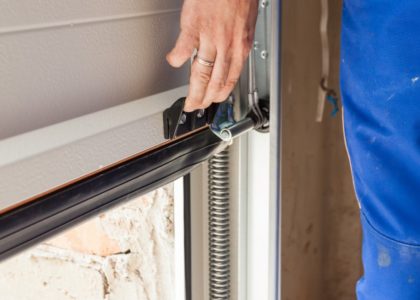
Professional garage door repair can help distinguish between a sealing problem, installation issue, and damaged component. A poor bottom seal, for example, might need replacement, but a gap can also involve floor irregularities or alignment.
Garage door maintenance should include attention to seals and operation. Mechanical reliability matters alongside thermal performance.
Damaged cables or a faulty spring require separate correction. Insulation will not resolve these problems, and garage door spring repair should be performed by a trained technician.
Can Insulation Be Added to an Existing Door?
Some doors may accept a manufacturer-approved insulation solution, but compatibility must be checked first.
Adding material changes the door’s weight and may affect its balance, hardware requirements, or warranty. Ask a professional to evaluate the door and any required changes to garage door parts.
Do not adjust spring tension yourself to compensate for added weight. A retrofit should be assessed as a system modification, not just a panel-covering project.
What About a Commercial Garage Door?
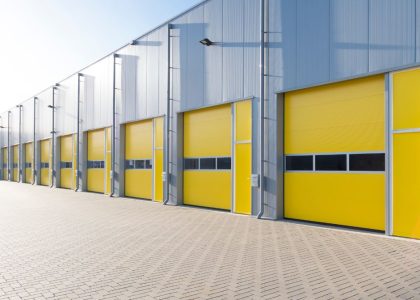
For a commercial garage door serving a heated or cooled space, thermal performance may be relevant to operating costs and working conditions.
Opening frequency and time left open also matter. A well-insulated door cannot limit heat transfer through an opening while it remains open.
Businesses should compare the door’s tested performance with the demands of the facility, including traffic, required clearances, and maintenance needs. Equipment selection should match the building and its operation.
Questions to Ask Before Choosing a Door
When discussing garage door services, ask:
- Is the garage conditioned or unconditioned?
- What performance information is available for the complete door?
- Are the seals and installation details included in the quote?
- Could repairs address the main concern?
- Does the project require changes to springs, tracks, or other hardware?
- What maintenance and warranty conditions apply?
For residential garage door services, describe how your household uses the garage and what improvement matters most. Avoid relying on a promised percentage reduction in household energy bills without a property-specific basis.
Discuss Your Options With Bulldog Garage Repair
Energy-efficient garage doors can offer value, particularly when a replacement is already needed or the space has specific comfort requirements. The best choice depends on the whole installation and your goals.
Bulldog Garage Repair lists residential and commercial installation, garage door repair, maintenance, spring repair, and replacement parts among its Dallas–Fort Worth services.
Call 972-433-0407 or visit Bulldog Garage Automatic Gates & Garage Doors to discuss whether repair, improved seals, or a replacement door makes sense for your property.
Frequently Asked Questions
Will an insulated garage door lower my electricity bill?
It may reduce heating or cooling demand in some situations, but savings depend on the building, conditioning, usage, and existing door. A specific reduction cannot be assumed.
Will insulation keep my garage cool during summer?
Insulation slows heat transfer. It does not provide cooling, and the garage can still become hot.
Is a higher R-value always the best choice?
No. Compare whole-door performance, seals, fit, and the garage’s use. Section R-value alone does not describe the complete installation.
Should I replace my door if the weatherstripping is damaged?
Not necessarily. If the door is otherwise sound, compatible replacement seals or other repairs may address the problem.
Can I install insulation without checking the springs?
Have the proposed retrofit evaluated first. Added weight may change balance and hardware requirements; spring adjustments require a trained technician.
📍 Proudly serving homes and businesses across Dallas, Texas
📞 Call us today or visit www.bulldoggaragerepair.com to schedule service.