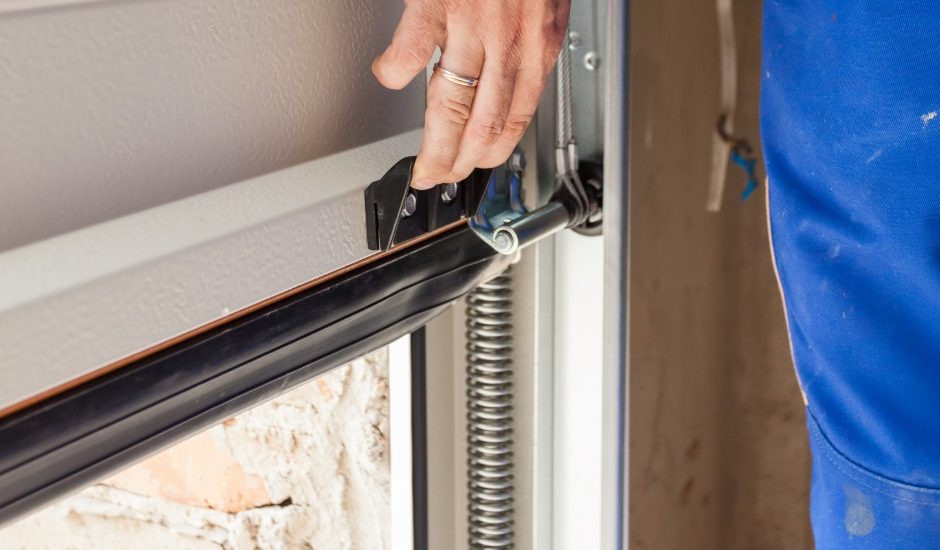
Every time your garage door opens and closes, its moving components go to work. Springs cycle, rollers travel through tracks, and hinges pivot between door sections. Repeated movement gradually wears down the garage door parts that keep the system operating properly.
There is no universal order in which components fail. Door weight, usage, materials, installation, and maintenance all affect service life. However, certain parts deserve particular attention because they experience frequent movement or exposure.
For homeowners and businesses across Dallas–Fort Worth, recognizing wear early can help identify when professional garage door repair is needed.
1. Garage Door Springs
Springs are central to the counterbalance system that offsets the door’s weight. They are designed for a certain number of operating cycles, so frequently used doors can reach that limit sooner than lightly used doors. Clopay
Possible warning signs include:
- A visible break in a torsion spring.
- A sudden bang followed by poor operation.
- A door that no longer opens normally.
- Uneven movement or an apparent loss of lifting assistance.
These symptoms require inspection because other faults can cause similar behavior.
Garage door spring repair should be handled by a trained technician. Stop using a door with a suspected broken spring, and do not attempt to adjust spring tension or related hardware.
2. Rollers
Rollers guide the door through its tracks. Their wheels, stems, and bearings can develop wear, affecting how smoothly the door moves.
New rattling, rough travel, damaged wheels, or a roller sitting incorrectly in the track can indicate trouble. Track alignment and surrounding hardware should also be checked before assuming the roller alone is responsible.
Replacement rollers must suit the door and its hardware. A technician can recommend compatible garage door parts based on the equipment installed.
3. Lift Cables
Lift cables work with the spring system to transfer lifting force to the door. Fraying, broken strands, kinks, or visible deterioration require professional attention.
Damaged cables may also appear slack or displaced. A crooked door can indicate a cable problem, although springs, tracks, and other components may also be involved.
Keep the door out of service if you notice these conditions. Do not touch, tighten, or reposition cables, drums, or bottom brackets. Their connection to the tensioned spring system makes this work unsuitable for a homeowner repair.
4. Hinges
Hinges allow sectional door panels to pivot as the door follows the curved track. Repeated movement can contribute to wear at hinge joints and attachment points.
Cracked metal, abnormal movement, or deteriorated mounting areas may warrant inspection. Damage around a hinge may also involve the door section itself.
Adding lubricant cannot repair a cracked hinge or restore damaged mounting material. Professional garage door services should address the source of the movement alongside the visibly worn component.
5. Bottom Seals and Perimeter Weatherstripping
Weather seals contact the floor and frame while facing outdoor exposure. Over time, they can crack, tear, flatten, or lose flexibility. Clopay identifies visible cracking and wear as reasons to evaluate weatherstripping for replacement. Clopay
Watch for loose sections, visible gaps, or seals that no longer make consistent contact.
A gap can also result from an uneven floor or door alignment problem, so replacing the seal may not resolve every issue. The replacement must match the door’s retainer and profile.
Weatherstripping helps limit drafts and debris, but it does not make a garage floodproof.
6. Bearings and Extension-Spring Pulleys
Depending on the door design, bearings support rotating shafts, while pulleys guide cables in an extension-spring system.
Worn moving surfaces can contribute to noise or irregular operation. Grinding, visible deterioration, or unusual movement should be investigated.
Because these symptoms overlap with other faults, a complete assessment is more useful than replacing parts based on sound alone. Components associated with the counterbalance system should be evaluated by a trained technician.
What About Garage Door Openers?
An opener can develop its own faults, but difficulty moving the door does not automatically mean the motor needs replacement.
Binding hardware, spring damage, or cable problems can interfere with operation. Increasing opener force to overcome mechanical trouble can leave the underlying fault unresolved.
Professional garage door repair should distinguish between an opener issue and a problem with the door assembly before recommending replacement.
Why Commercial Garage Door Usage Matters
A commercial garage door may operate repeatedly throughout the working day. Frequent cycling increases accumulated use, making equipment selection and maintenance planning important.
Service requirements depend on the door’s design, operating frequency, and environment. A sectional loading-bay door and a rolling steel door do not use identical components.
Businesses should follow the equipment manufacturer’s maintenance guidance and discuss their operating demands with a technician. Residential garage door services should likewise account for household usage and the installed system.
How Garage Door Maintenance Helps
Routine garage door maintenance provides opportunities to identify deterioration and correct developing problems.
Useful priorities include:
- Follow the door and opener manufacturers’ maintenance instructions.
- Observe visible components from a safe position.
- Arrange an inspection when noise or movement changes.
- Use only manufacturer-approved lubricants in specified locations.
- Have damaged lifting hardware assessed before further operation.
Avoid applying a general lubricant to every component. Maintenance requirements vary by roller design, bearing type, and opener system.
If the door is crooked, a cable is loose or frayed, or a spring appears broken, stop using it. If it is open or stuck partway, keep people away and do not pull the emergency release or attempt to reposition it.
Schedule Garage Door Services With Bulldog Garage Repair
Knowing which garage door parts commonly develop wear helps you recognize when a change deserves attention. Springs, rollers, cables, hinges, seals, and supporting hardware all contribute to reliable operation.
Bulldog Garage Repair lists garage door repair, preventive maintenance, spring repair, damaged-cable service, and replacement parts among its Dallas–Fort Worth services.
Call 972-433-0407 or visit Bulldog Garage Automatic Gates & Garage Doors to discuss your door’s symptoms and request service.
Frequently Asked Questions
Which garage door parts wear out first?
There is no fixed order. Springs, rollers, hinges, cables, and seals are common wear points. Usage, conditions, and component quality affect which requires attention first.
How long should garage door springs last?
Springs have a rated cycle life rather than a guaranteed lifespan in years. Daily usage and operating conditions affect when replacement becomes necessary.
Does a noisy garage door mean parts need replacement?
Not always. Noise may come from wear, alignment issues, loose hardware, or maintenance needs. An inspection should identify the cause.
Can damaged cables be repaired with a clamp or splice?
Do not attempt makeshift cable repairs. Have a trained technician assess the cable and install an appropriate replacement when required.
Do I need a new door when one component wears out?
Not necessarily. An isolated worn component may be replaceable when the remaining door is sound. Extensive damage or multiple significant faults may justify comparing repair and replacement.
📍 Proudly serving homes and businesses across Dallas, Texas
📞 Call us today or visit www.bulldoggaragerepair.com to schedule service.