
A malfunctioning garage door does not always need to be replaced. Problems involving worn rollers, damaged springs, misaligned tracks, faulty sensors, or a broken opener can often be corrected with professional garage door repair. However, replacement may be the better long-term decision when damage is extensive, breakdowns are recurring, or the door no longer meets the property’s security and operational needs.
The right choice depends on the door’s age, construction, condition, repair history, safety, energy efficiency, and replacement-part availability. Understanding these factors can help Dallas homeowners and businesses avoid unnecessary expenses while keeping their garage door reliable.
Start With a Professional Garage Door Inspection
The visible problem may not reveal the complete condition of the system. A door that refuses to open could have a failed opener, but it could also have a broken spring, damaged cable, bent track, or poor balance.
Professional garage door specialists should inspect:
- Door panels or sections
- Tracks and mounting brackets
- Rollers and hinges
- Springs
- Lift cables
- Drums and bearings
- Weather seals
- Manual locks
- Automatic opener
- Safety sensors
- Emergency release
- Door balance
- Structural attachment points
An inspection helps determine whether the problem is limited to one repairable component or affects several parts of the system.
When Garage Door Repair Is Usually Better
Repair is often the practical choice when the door remains structurally sound and the problem is limited to a replaceable or adjustable component.
1. One Spring Has Failed
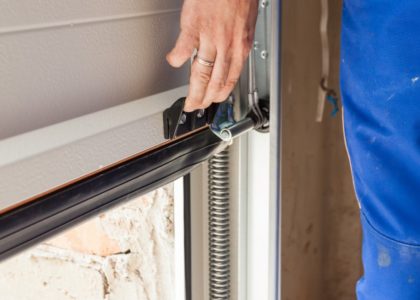
Garage door springs counterbalance the door’s weight. When a spring breaks, the door may become extremely heavy, open unevenly, or stop moving altogether.
Spring replacement may restore normal operation when:
- The door sections remain sound
- Tracks are properly aligned
- Cables and drums are serviceable
- The opener is functioning
- The door is otherwise in good condition
Spring work involves stored mechanical energy and should be handled by trained technicians. Property owners should not attempt to wind, release, or replace high-tension springs without appropriate training and tools.
2. The Garage Door Opener Malfunctions
A failed opener does not automatically mean that the door needs replacement.
Opener problems may involve:
- Remote controls
- Keypads
- Worn gears
- Belts or chains
- Limit settings
- Control boards
- Wiring
- Motors
- Safety sensors
- Power supplies
- Travel or force settings
Before replacing the opener, the technician should confirm that the door is balanced and moves freely by hand. An opener should not be used to overcome a heavy or binding door.
3. The Safety Sensors Are Misaligned
A door that begins closing and immediately reverses may have a sensor problem rather than major mechanical damage.
Possible causes include:
- Misalignment
- Dirty sensor lenses
- Loose brackets
- Damaged wiring
- Blocked sensor beams
- Direct sunlight interference
- Failed sensor components
Sensor adjustment or replacement is generally more practical than replacing an otherwise functional garage door.
4. Rollers or Hinges Are Worn
Worn rollers and hinges can cause squeaking, vibration, uneven movement, and increased stress on the tracks.
Replacing these parts may improve:
- Movement
- Noise level
- Alignment
- Door stability
- Component life
The technician should still inspect the tracks, panels, and mounting points to ensure that another problem did not cause the premature wear.
5. The Tracks Need Adjustment
Loose or slightly misaligned tracks may sometimes be corrected through professional adjustment and reinforcement.
Repair may be appropriate when:
- The tracks are not severely bent
- Mounting surfaces remain sound
- Rollers have not repeatedly left the tracks
- The door sections are not distorted
- Structural supports remain stable
Severely damaged, incompatible, or deformed tracks may require replacement.
6. Weather Seals Are Damaged
Cracked, missing, or compressed seals can allow water, dust, insects, and outdoor air to enter the garage.
Replacing the bottom or perimeter seals may improve:
- Weather protection
- Comfort
- Energy performance
- Pest resistance
- Contact with the floor
Seal replacement will not correct major gaps caused by an uneven door, damaged framing, poor track alignment, or a severely uneven floor.
7. A Single Door Panel Is Damaged
One damaged panel may sometimes be replaced without removing the entire door.
Panel replacement depends on:
- Manufacturer
- Door model
- Panel dimensions
- Color and finish
- Insulation
- Hardware compatibility
- Age of the door
- Replacement-part availability
If the impact also damaged hinges, tracks, struts, or the opening, additional repair may be required.
When Garage Door Replacement Is Usually Better
Replacement may offer better value when repairs would be extensive, temporary, or unable to restore reliable operation.
1. Several Panels Are Damaged
Widespread panel damage can weaken the door and interfere with movement. Multiple damaged sections may also prevent the door from sealing correctly.
Replacement may be more practical when:
- Several panels are bent
- Panel joints no longer align
- Cracks affect structural strength
- Reinforcement has separated
- Compatible panels are unavailable
- Repair costs approach the cost of a new door
A heavily damaged door should not continue operating until it has been professionally evaluated.
2. The Door Has Recurring Problems
Repeated breakdowns can indicate that the system is approaching the end of its useful service life or that several components are deteriorating at the same time.
Recurring problems may include:
- Repeated spring failures
- Frequent track misalignment
- Ongoing cable trouble
- Persistent opener strain
- Recurring sensor faults
- Loose hardware
- Repeated panel damage
- Excessive vibration
- Unreliable closing
If one repair is followed quickly by another, replacement may provide more predictable performance and reduce ongoing disruption.
3. The Door Is Severely Corroded or Deteriorated
Rust, rot, cracks, delamination, and material deterioration can affect both appearance and structural performance.
Replacement should be considered when:
- Corrosion affects multiple sections
- Wood components are extensively rotted
- Panel layers are separating
- Mounting points are weakened
- Hardware no longer attaches securely
- The bottom section is deteriorated
- Water damage is widespread
Cosmetic refinishing cannot restore structural material that has lost significant strength.
4. Replacement Parts Are No Longer Available
Older or discontinued door systems may use unique panels, tracks, hinges, springs, or operator components.
A repair may become impractical when:
- Compatible parts cannot be obtained
- Available parts require extensive modification
- The manufacturer no longer supports the system
- Modern safety equipment cannot be integrated
- Several obsolete components need service
Garage door specialists can determine whether safe, compatible parts remain available.
5. The Door No Longer Provides Adequate Security
A garage door protects vehicles, tools, inventory, and interior access points. Replacement may be appropriate if the existing door has weak panels, unreliable locks, large gaps, or repeated closing failures.
Security concerns include:
- The door does not close fully
- Locks no longer engage
- Panels can be easily displaced
- Sections have separated
- Controls are outdated
- Lost remotes cannot be deactivated
- The opener lacks suitable security features
- The door frequently remains open because of faults
For businesses, unreliable commercial garage doors can expose inventory, vehicles, equipment, and restricted work areas.
6. The Door Has Poor Energy Performance
An uninsulated or poorly sealed door may contribute to unwanted heat transfer, especially when the garage or commercial work area is conditioned.
Replacement with an insulated garage door may be worthwhile when:
- The garage is attached to occupied space
- Employees work near the opening
- Temperature-sensitive materials are stored inside
- Existing panels have little or no insulation
- Seals and panel joints cannot be improved
- The property owner wants a more rigid door assembly
Insulation does not automatically make a door more secure, but multilayer construction may improve rigidity and comfort.
7. The Door No Longer Fits the Property’s Needs
A functional door may still be unsuitable when the property’s operations have changed.
Replacement may support:
- Higher traffic volume
- Faster opening and closing
- Improved access control
- Better insulation
- Larger vehicle clearance
- Stronger security
- Updated appearance
- Quieter operation
- Smart controls
- Commercial workflow changes
A busy commercial facility may benefit from a high-speed garage door, while another property may need an overhead, insulated, rolling steel, or fire-rated system.
Repair vs. Replacement at a Glance
| Door condition | Repair may be better | Replacement may be better |
|---|---|---|
| Broken spring | Door is otherwise sound | Several major components are failing |
| Opener failure | Door moves smoothly by hand | Door and opener are both obsolete |
| Sensor problem | Wiring or alignment can be corrected | Safety system is incompatible or outdated |
| Panel damage | One compatible panel is available | Several panels are damaged |
| Track problem | Damage is minor and localized | Tracks are severely bent or incompatible |
| Weather-seal failure | Door remains aligned | Large gaps result from structural distortion |
| Corrosion or rot | Damage is superficial | Deterioration affects structural strength |
| Recurring breakdowns | One root cause is identified | Multiple systems repeatedly fail |
| Poor insulation | Seals can improve performance | Door construction no longer meets the need |
| Security problem | Lock or control can be upgraded | Door itself is weak or unreliable |
The final recommendation should be based on the complete system rather than one symptom.
Consider the Door’s Age and Condition Together
Age alone does not determine whether replacement is necessary. An older door that has been properly installed and maintained may remain serviceable, while a newer door may need replacement after severe impact or improper installation.
A professional assessment should consider:
- Installation quality
- Frequency of use
- Previous repairs
- Maintenance history
- Weather exposure
- Door material
- Current safety
- Parts availability
- Structural condition
- Expected future use
The better question is not simply, “How old is the door?” It is, “Can this system be restored to safe and reliable operation at a reasonable cost?”
Residential vs. Commercial Garage Door Decisions
The repair-or-replacement decision can differ between residential and commercial properties.
Residential Garage Doors
Homeowners may prioritize:
- Reliable daily access
- Curb appeal
- Quiet operation
- Insulation
- Smart controls
- Security
- Compatibility with the home
A localized repair may be enough when the door remains attractive and structurally sound.
Commercial Garage Doors
Businesses may need to consider:
- Daily cycle count
- Vehicle traffic
- Operational downtime
- Employee safety
- Inventory security
- Access-control integration
- Replacement-part availability
- Fire and building requirements
- Energy performance
- Emergency operation
Commercial downtime may be more expensive than the repair itself. If an aging door repeatedly interrupts deliveries or operations, replacement may offer better long-term value.
How Different Commercial Door Types Affect the Decision
Commercial properties use several types of doors, and each has different repair and replacement considerations.
Insulated Garage Door
An insulated garage door may be repairable when damage affects only hardware, seals, or one compatible section. Replacement may be better when insulation has absorbed moisture, several panels are crushed, or thermal performance is no longer adequate.
High-Speed Garage Door
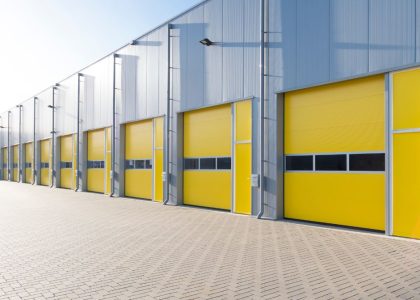
A high-speed garage door depends on specialized controls, safety equipment, and moving components. Repair is often appropriate when compatible parts are available. Replacement may be considered when the system is obsolete or no longer supports the required traffic volume.
Overhead Garage Door
An overhead garage door may need repair for springs, cables, tracks, rollers, panels, or operators. Replacement may be preferable when damage affects several sections or the complete counterbalance system.
Fire-Rated Garage Door
A fire-rated garage door must be serviced according to its approved design and applicable requirements. Unauthorized substitutions or modifications may affect the rating. Specialists should determine whether damage can be repaired while preserving the tested assembly.
How Dallas Weather Affects Garage Doors
Garage doors in the Dallas area may experience:
- Intense sunlight
- High summer temperatures
- Severe thunderstorms
- High winds
- Hail
- Heavy rain
- Sudden temperature changes
- Occasional freezing conditions
Weather can contribute to faded finishes, deteriorated seals, corrosion, panel damage, sensor problems, or material movement.
Following a major storm, schedule an inspection if the door:
- Has visible dents
- Makes new noises
- Moves unevenly
- Has damaged tracks
- Does not seal properly
- Reverses unexpectedly
- Was struck by debris
- Has water entering beneath it
Storm damage may extend beyond what is visible from the exterior.
Can Garage Door Maintenance Delay Replacement?
Routine garage door maintenance can extend component life and help owners identify problems before they become severe.
Maintenance may include:
- Inspecting springs and cables
- Checking tracks and rollers
- Tightening appropriate hardware
- Testing door balance
- Cleaning safety sensors
- Testing automatic reversal
- Inspecting weather seals
- Lubricating approved moving components
- Checking opener operation
- Listening for unusual sounds
Maintenance cannot restore severely damaged panels or obsolete systems, but it may prevent avoidable wear and repeated emergency repairs.
Should You Repair or Replace the Opener?
The garage door and opener should be evaluated separately. A door may be in excellent condition while its opener needs replacement.
Opener repair may be appropriate when:
- The problem involves a remote or keypad
- A replaceable gear or sensor has failed
- The unit is properly sized
- Safety equipment remains compatible
- Parts are readily available
Opener replacement may be better when:
- The motor is unreliable
- Replacement parts are unavailable
- The unit lacks suitable safety features
- The opener is undersized
- Controls no longer meet security needs
- Breakdowns are recurring
- Smart or backup-power features are desired
A new opener should only be installed after confirming that the mechanical door is balanced and moves correctly.
Why DIY Repairs Can Be Risky
Some maintenance tasks, such as visually inspecting the door or cleaning sensor lenses, may be manageable for property owners. Repairs involving high-tension or load-bearing components are different.
Property owners should avoid adjusting:
- Torsion springs
- Extension springs
- Lift cables
- Cable drums
- Bottom brackets
- Counterbalance systems
- Heavy commercial door sections
Incorrect repair may release stored energy, cause the door to fall, or damage other components. Professional garage door services are advisable for mechanical, structural, or electrical faults.
Comparing Repair and Replacement Estimates
A professional estimate should make it easy to compare the two options.
Ask the garage door company to identify:
- Failed components
- Cause of the failure
- Parts being replaced
- Labor included
- Condition of remaining components
- Expected repair durability
- Warranty coverage
- Door replacement options
- Opener compatibility
- Disposal costs
- Safety upgrades
- Maintenance recommendations
A low repair estimate may not represent good value if several other components are close to failure. Conversely, a complete replacement may be unnecessary when one affordable repair can restore reliable operation.
Automatic Gates Need the Same Evaluation
The repair-or-replacement decision also applies to automatic gates.
Automatic gate repair may be appropriate for:
- Misaligned sensors
- Worn rollers
- Damaged hinges
- Access-control faults
- Operator components
- Limited track damage
Replacement may be considered when:
- The gate frame is severely bent
- The operator is undersized or obsolete
- Structural deterioration is widespread
- Safety equipment cannot be integrated
- Breakdowns repeatedly interrupt access
- The system no longer meets security needs
Professional automatic gate services should evaluate the physical gate, operator, controls, safety devices, and access equipment together.
Questions to Ask Garage Door Specialists
Before deciding between repair and replacement, ask:
- What caused the problem?
- Can the door be restored to safe operation?
- Which components need immediate service?
- Are compatible replacement parts available?
- How long is the repair expected to last?
- Are other parts approaching failure?
- Will the repair include a warranty?
- Is the opener compatible with a new door?
- Would replacement improve security or insulation?
- What maintenance will be required?
- How will the old door be removed?
- Are safety tests included?
Clear answers help property owners compare immediate cost with long-term reliability.
Professional Garage Door Repair in Dallas
Choosing between replacement and garage door repair requires more than comparing prices. The decision should account for safety, structural condition, repair history, security, energy performance, component availability, and expected future use.
Bulldog Automatic Gates & Garage Doors provides garage door services for residential and commercial properties in Dallas and surrounding communities. Services include garage door repair, replacement, installation, opener service, garage door maintenance, safety inspections, and commercial garage door service.
The company also works with automatic gates and provides automatic gate services for residential and commercial entrances.
Service areas include Dallas, Addison, Carrollton, Garland, and The Colony.
Contact Bulldog Automatic Gates & Garage Doors to schedule a professional inspection and determine whether repairing or replacing your garage door is the better option.
📍 Proudly serving homes and businesses across Dallas, Texas
📞 Call us today or visit www.bulldoggaragerepair.com to schedule service.
Frequently Asked Questions
Is it cheaper to repair or replace a garage door?
Repair is generally less expensive when the problem is limited to a spring, roller, sensor, opener component, seal, or compatible panel. Replacement may offer better value when several major components are damaged or breakdowns are recurring.
Can one damaged garage door panel be replaced?
Sometimes. Panel replacement depends on the door model, manufacturer, size, finish, insulation, condition, and availability of a compatible section.
Should I replace my garage door if the spring breaks?
Not necessarily. A broken spring can often be replaced when the door, tracks, cables, panels, and opener remain in good condition.
When is a garage door too damaged to repair?
Replacement may be advisable when several panels are damaged, the structure is distorted, corrosion or rot is widespread, tracks are severely bent, or compatible parts are unavailable.
Does a new garage door require a new opener?
Not always. An existing opener may be retained if it is functional, correctly sized, compatible with the new door, and equipped with suitable safety features.
Can garage door maintenance prevent expensive repairs?
Routine maintenance can identify worn or loose components before they cause larger problems. However, maintenance cannot prevent every failure or restore severe structural damage.
Should a commercial garage door be repaired or replaced?
The decision depends on the damage, daily cycle count, downtime, security requirements, part availability, and remaining service life. Repeated operational failures may make replacement more practical.
Does Bulldog Automatic Gates & Garage Doors serve areas outside Dallas?
Yes. The company serves Dallas, Addison, Carrollton, Garland, and The Colony.